The Summer bank holiday weekend brought back 18 lapsed customers
18 customers who had been quiet for a month or more came back around the bank holiday. About 4 times the normal rate.
Why we think thisTapReward turns first-time customers into regulars with a digital loyalty card that lives in Apple & Google Wallet. Then, because every visit is counted, it tells you what is going on: who came back, who is drifting, what the bank holiday did to your numbers, and what the weather, the term dates and the events down the road mean for next week. No app. No paper. One tap for your customers.
First month free. Then £39 a month. No contract. Cancel anytime.
Six months of a real-looking café, nothing to sign up for.

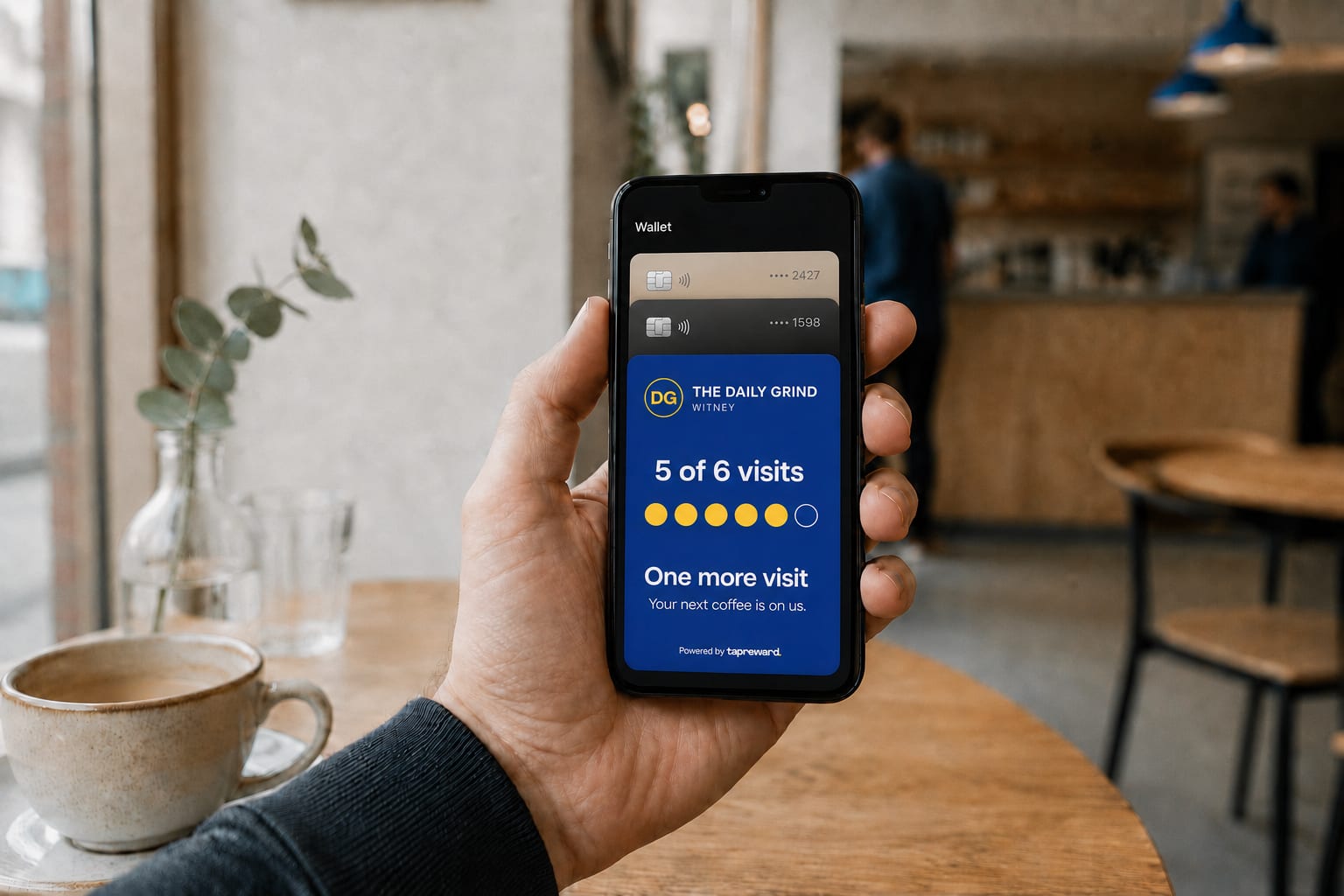
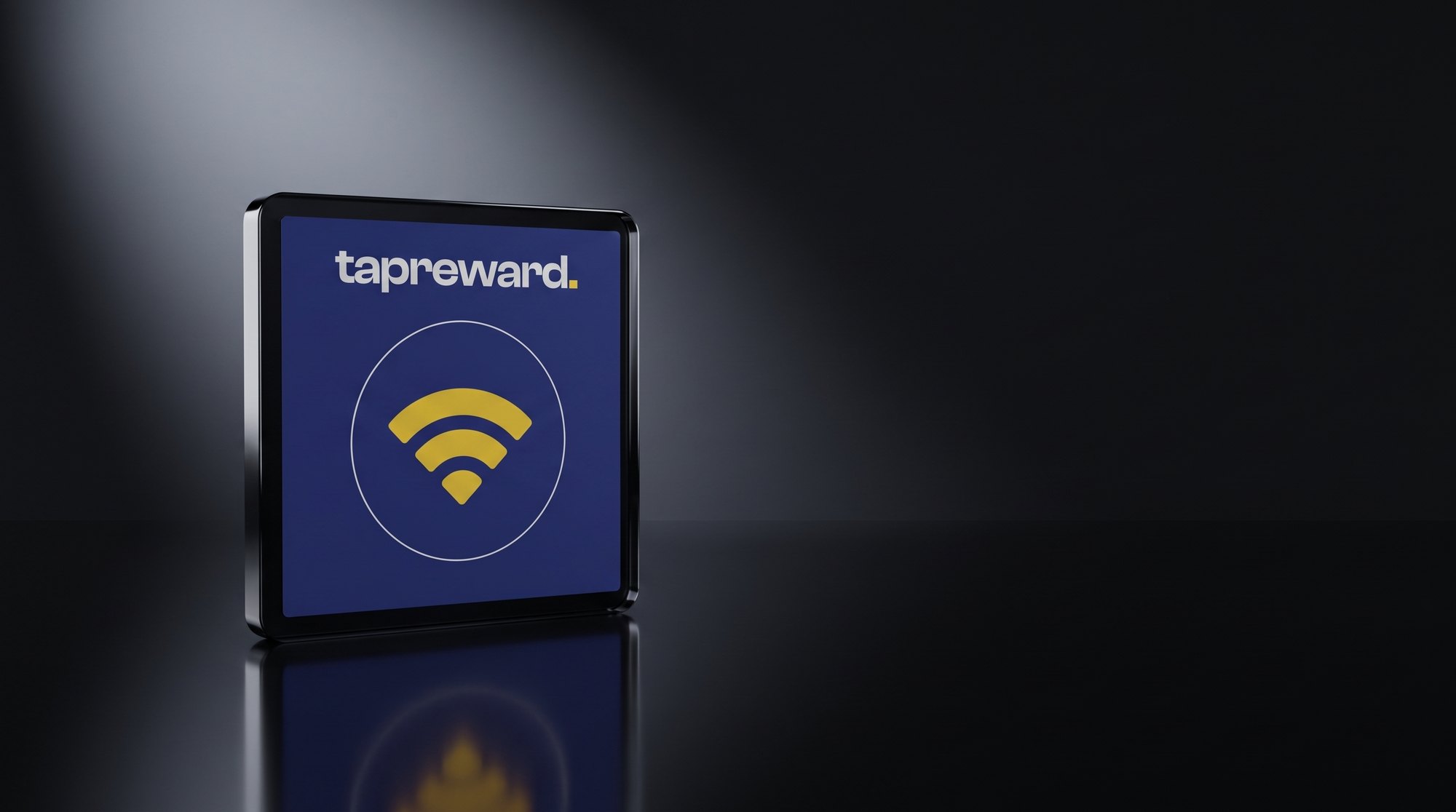
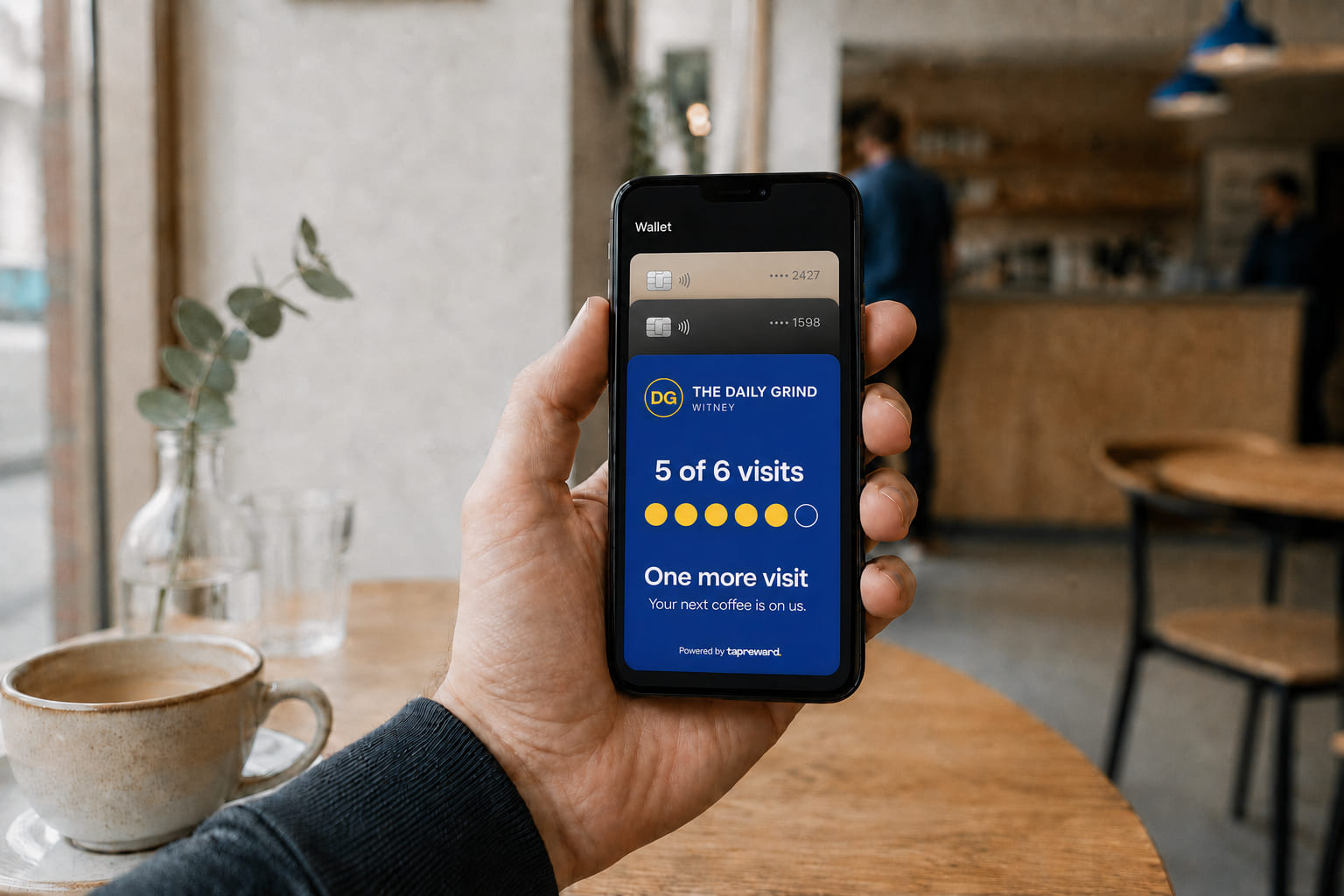
Learn what makes your customers tick, and encourage repeat visits. TapReward is designed to replace outgoing paper stamp cards, and to clearly show an uptick in return visits.
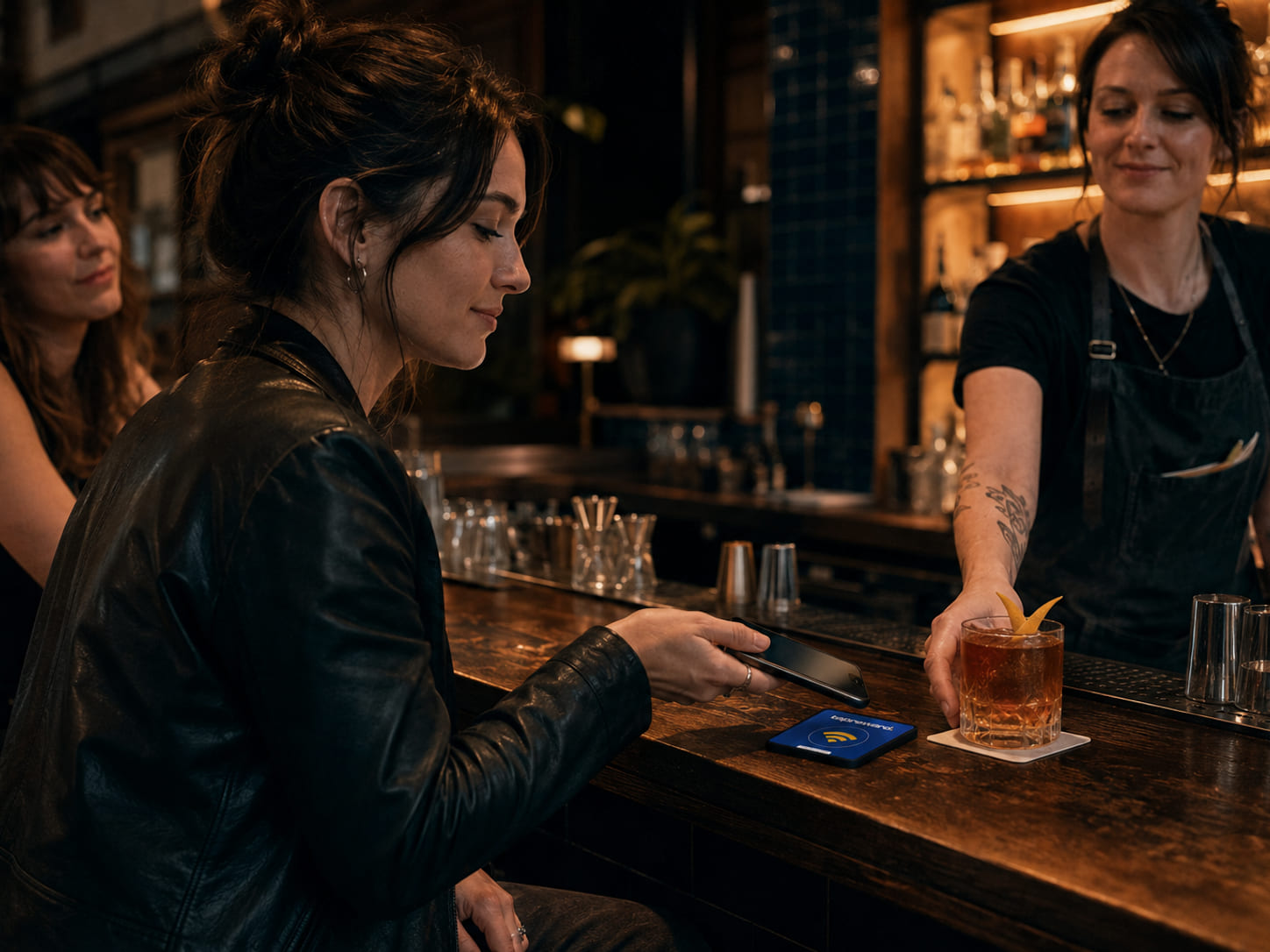
It goes where your customer’s bank card already lives, inside their phone. One tap on your counter and it saves into Apple or Google Wallet. Nothing to download, no account to create, nothing to lose at the bottom of a bag.
Every tap after that is one customer, coming back, and counted.
The first three things a paper card could never tell you, in plain English, through your own branded dashboard. There is a lot more below, but it all starts here.
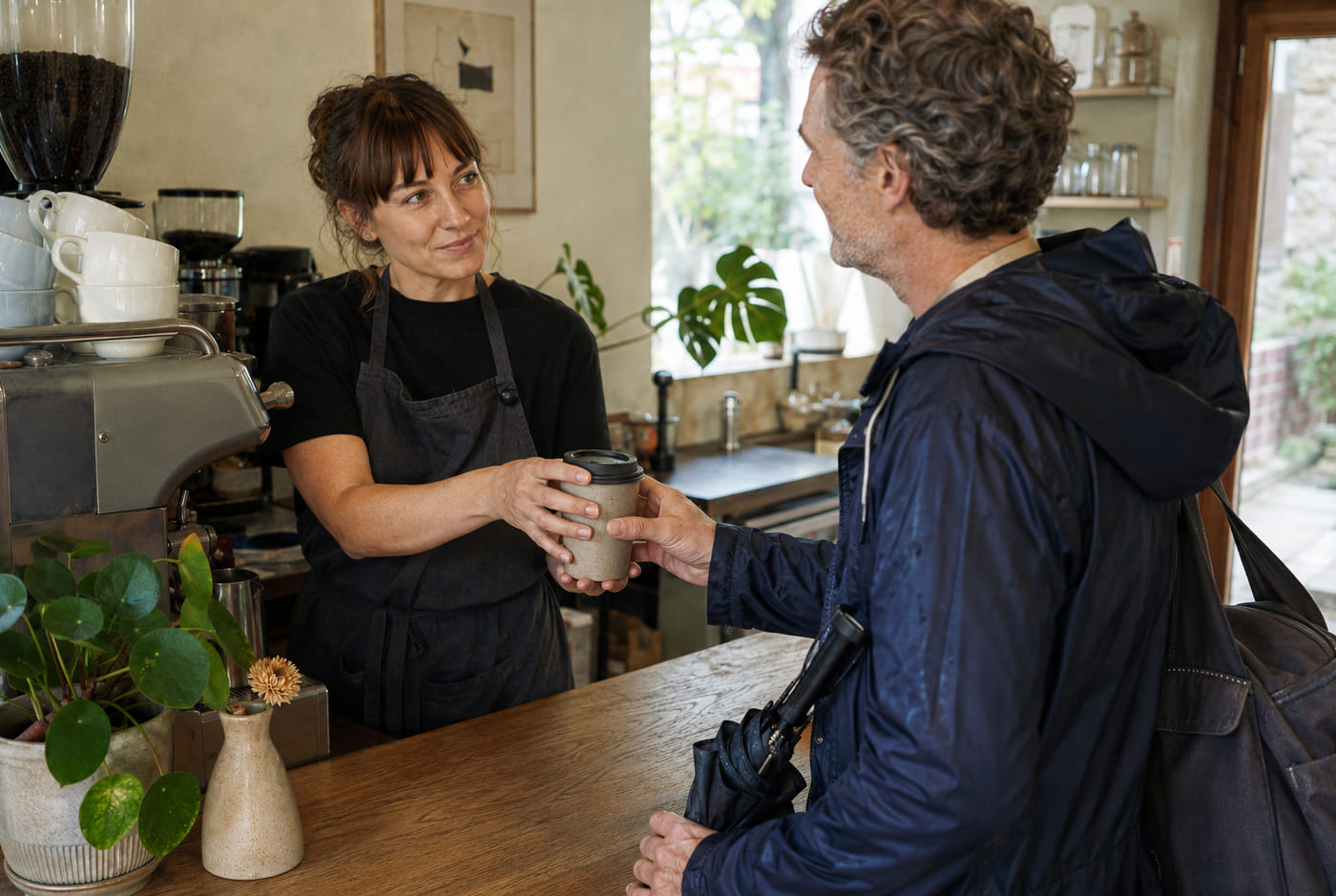
Not how many coffees you gave away. How many people returned, and how often. The number a stamp card has never been able to give you.
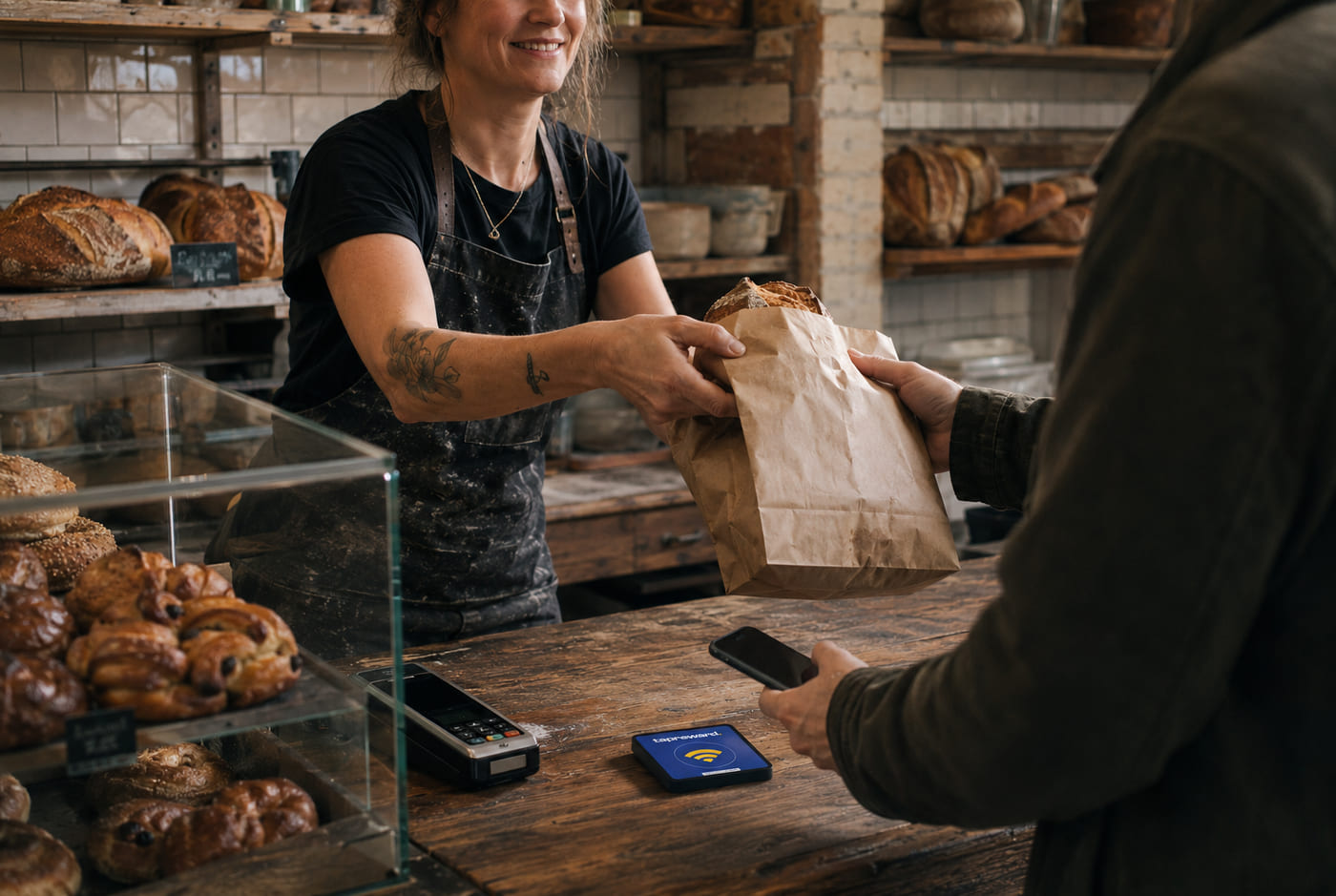
The regulars sitting one stamp short of a reward. They are the customers most likely to come back with the right nudge, and right now you have no idea who they are.
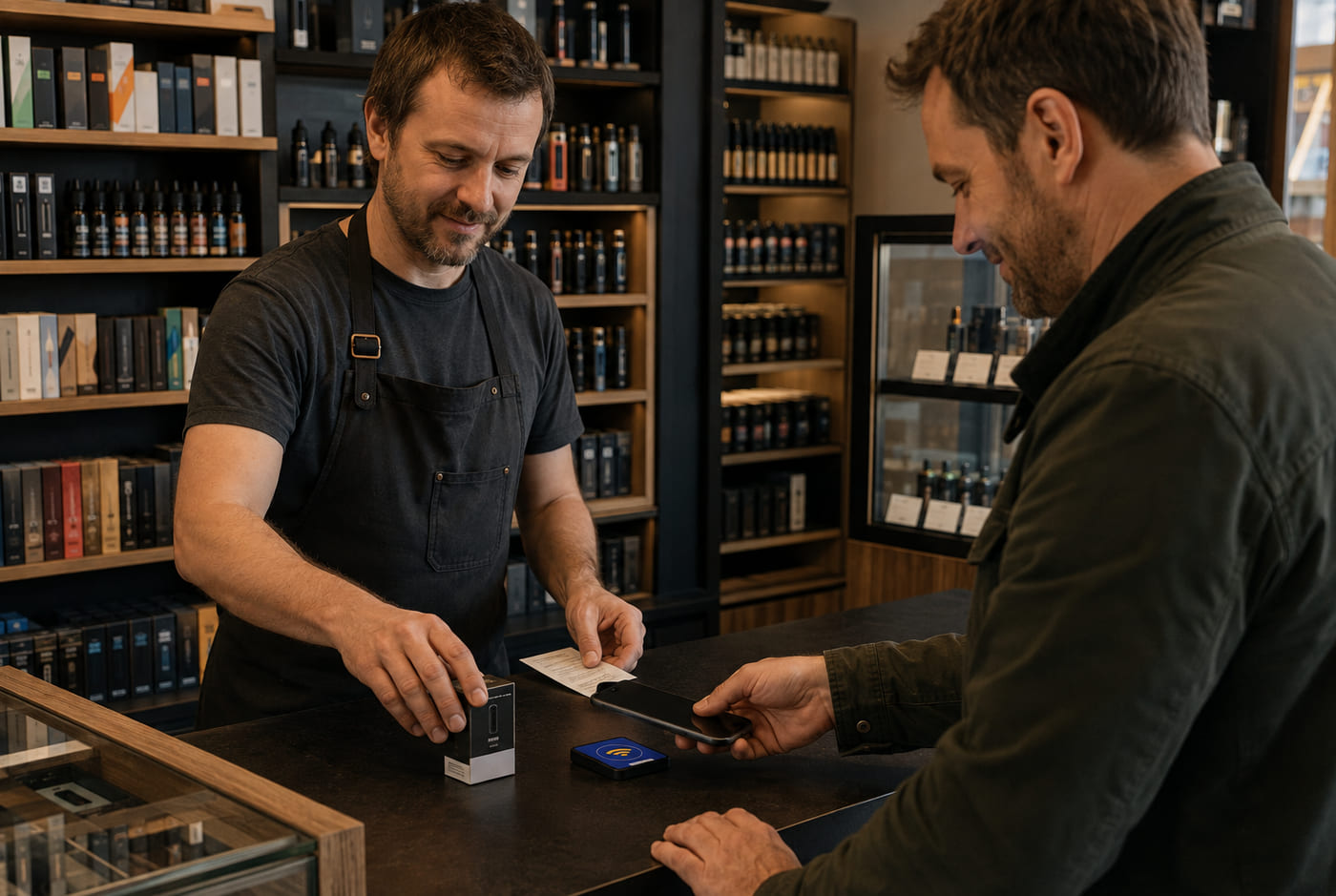
The ones who used to come in every week and have not been for a month. You lose them slowly, and without a list you never notice it happening.
And you can send opted-in customers a reason to come back, before they forget you exist.
Your customer list is yours. Export it at any time, and cancel at any time.
Numbers on their own are not much use at six in the morning. So TapReward reads them for you and writes down what it found, in a sentence, with its working underneath.
18 customers who had been quiet for a month or more came back around the bank holiday. About 4 times the normal rate.
Why we think thisReturning customers actually went up, from 74 to 85. What changed is the bottom of the fraction: 27 first-timers this period against 2 last time, and none of them has had time to come back yet. On the same regulars the figure would read 98%.
Why we think thisYou told us about a closure on 11 August. 5 fewer customers came back than usual that week. That may be the whole story, and it is worth watching whether it recovers.
Why we think thisFrom The Daily Grind, the sample café in our demo. Its six months are generated fresh every night, so the figures there will have moved on by the time you look. Your dashboard will say different things, about your shop.
When your numbers move, you should not have to work out why. And if you were closed, short-staffed or had roadworks outside, you can tell it in one tap so the record is right.
Your shop does not exist in a vacuum. TapReward knows where it is, and puts your numbers next to what is happening outside the door.
places to get a coffee within a five-minute walk of the demo café. A card in the wallet is how you stop being interchangeable.
of the demo café’s patch is aged 16 to 24. University term dates will move its trade more than school holidays.
fewer taps on a washout than on a fine day, across 172 days of the demo café’s own visits. A comparison, not a cause.
ticketed events within 5 km of the demo café next week, the closest a few minutes away. Worth being stocked up.
Weather, school and university terms, events, who lives nearby, how many rivals are within reach. Read overnight, ready when you open the dashboard. It does not tell you what to do. It makes sure you are not the last to know.
260 repeat visits at £3.80
In the demo café. An estimate, not takings.
Every repeat visit is counted, and you tell TapReward your average spend. So the top of your dashboard can say what the scheme brought back this month, in pounds. Labelled as an estimate, because that is what it is.
And when you email the regulars going quiet, you find out what happened next. In the demo, 10 of the 18 people emailed came back within a fortnight. That column, Came back, is the only number that says whether an email worked. So it is the one we show.
Send a nudge, enjoy extra sales, feel good about your returning customers.
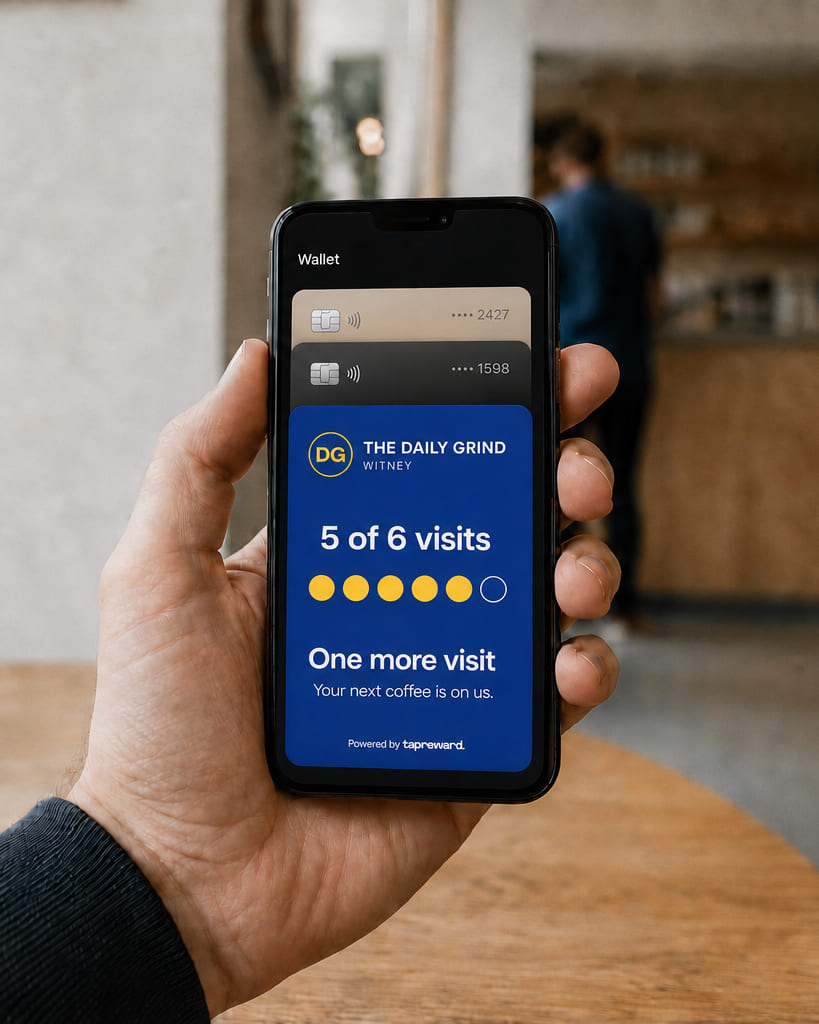
First visit: Tap, one email, done - about 15 seconds, no account. The card saves to Apple or Google Wallet.
After that: One tap, one stamp. No app, no login, no card to lose.
Normal visit: Nothing. Customers tap it themselves.
Reward time: The customer reads out a four letter code, staff type it into the shop phone. About five seconds.
Open your phone behind the counter. Who came back, who is close and who has gone quiet, in plain English. Plus what it noticed this week, and what next week looks like.
Loyalty cards are one of the most studied ideas in consumer research. Three findings, measured in real shops at real tills, are built straight into TapReward.
In a landmark field study, customers whose card came with a head start completed it at nearly twice the rate of customers who started from zero.
Every TapReward card begins with the first stamp already on it.
Nunes & Drèze, Journal of Consumer Research, 2006
Real café stamp-card holders bought more often the closer they got to their free coffee, finishing their cards about 16% sooner than their starting pace implied.
TapReward shows you who is one tap away, while they are at their most motivated.
Kivetz, Urminsky & Zheng, Journal of Marketing Research, 2006
Shoppers who redeemed a reward went on to spend 17.5% more a week in the month that followed. An unclaimed reward is a return visit waiting to happen.
TapReward lists every unclaimed reward so you can invite it back across your counter.
Taylor & Neslin, Journal of Retailing, 2005
Independent research on loyalty mechanics, not TapReward results. Your own dashboard shows your own numbers. Read the studies
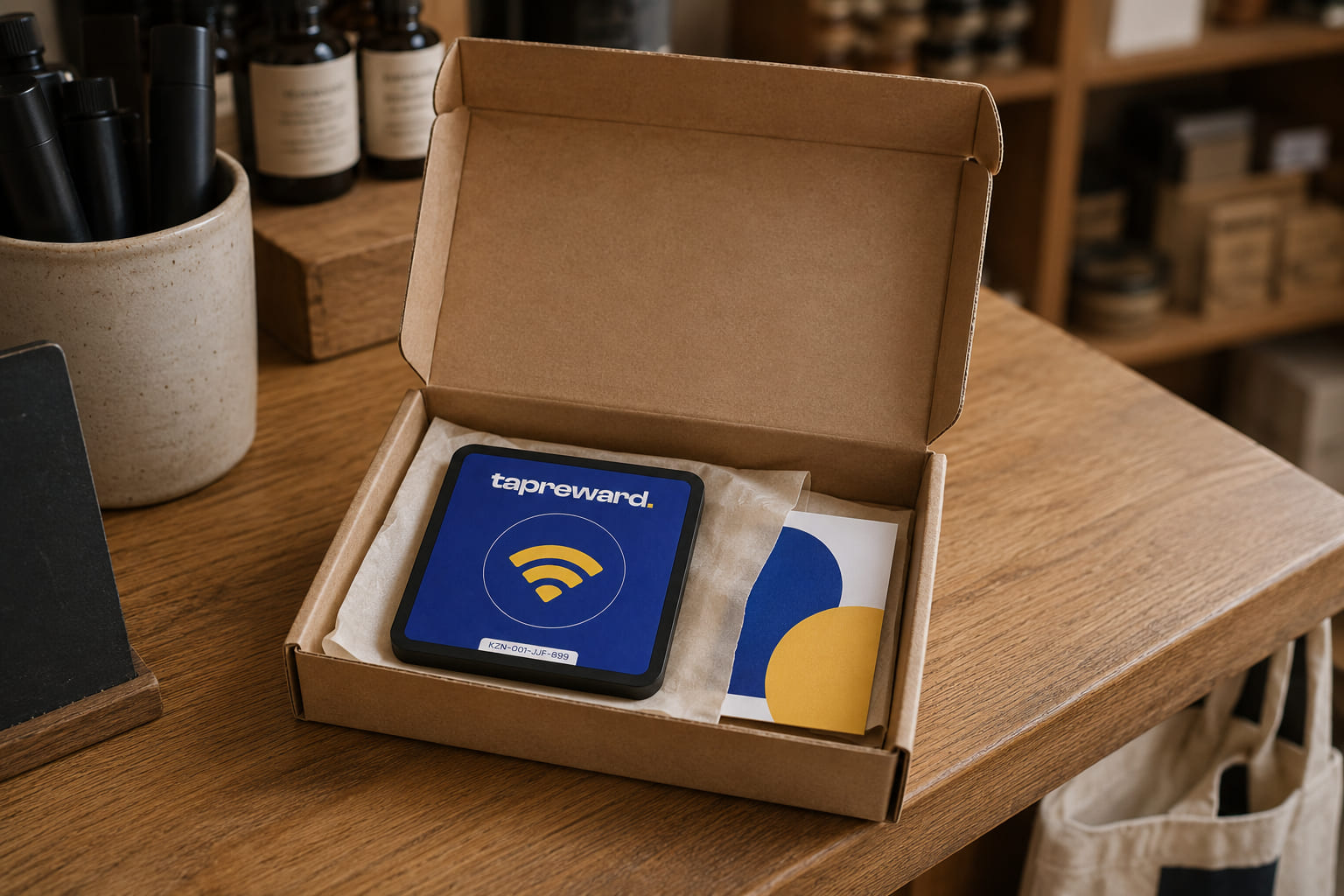
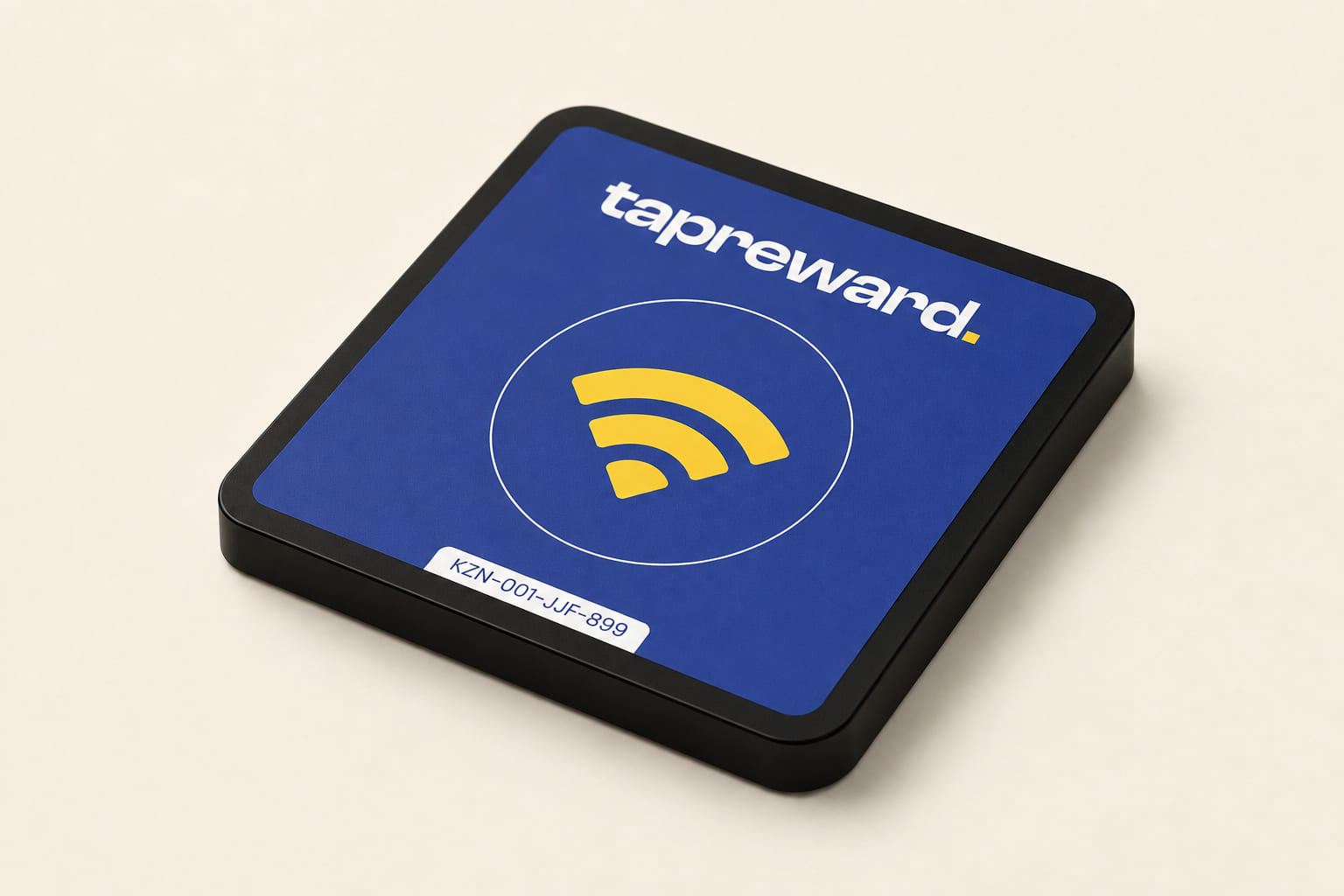
Your tap tag takes 1 minute to link to your shop. No battery, no Wi-Fi, no Bluetooth, no engineer, no setup call. Simply remove it from the box and place on your counter.
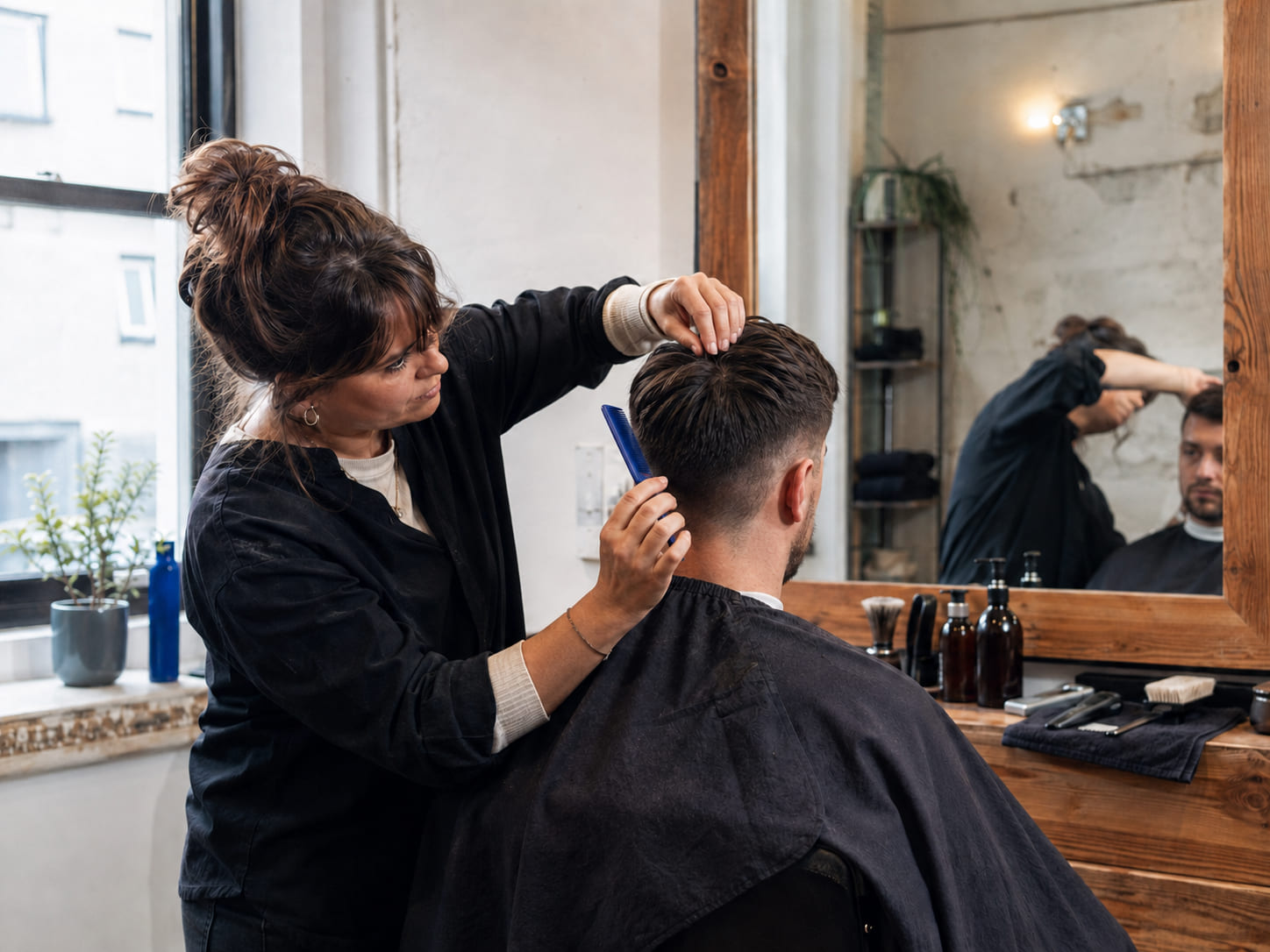
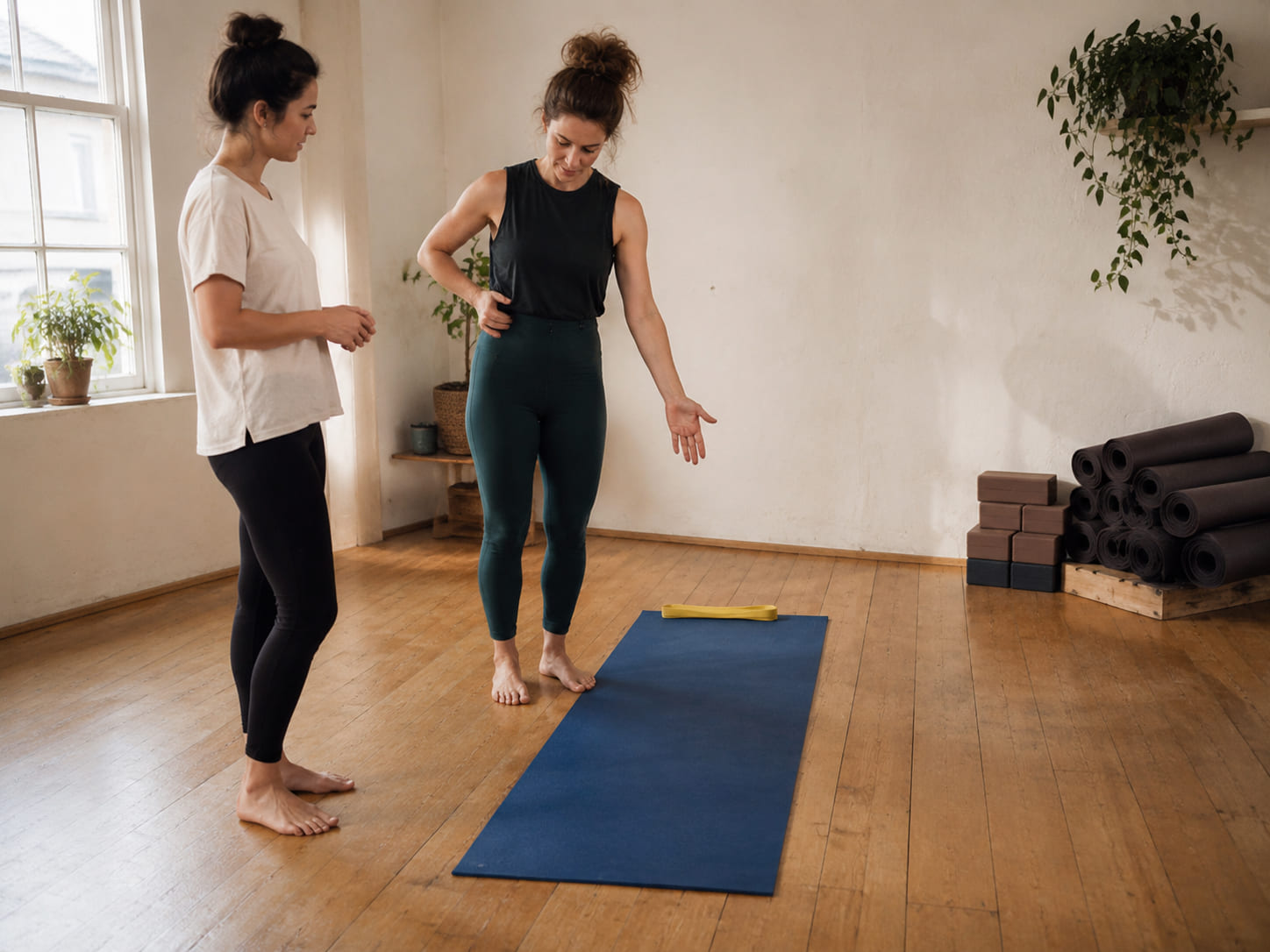
Four of the ten trades with a page of their own. Bakeries, sandwich shops, juice bars, hair salons, nail salons and car washes have one too: see every trade.
Free for the first month. Then £39. The tap tag arrives ready to use.
Three extra visits a week covers the £39. For that you get the card, the tap tag, the emails, and a running account of who is coming back, who is drifting, why your numbers moved and what next week looks like. The dashboard shows you whether it is working.
Start your free monthNo card details to start. Cancel anytime.
No. The card goes into the Wallet app already on their phone. The first visit takes an email address. After that it is one tap, forever.
Your tap tag is dispatched within 1 working day, and with you in 2 to 3. Your free month starts when you first tap it, not when you order, so nothing runs down while it is in the post.
About 15 seconds, on the customer’s own phone. They tap the tag, type one email address, and the card saves straight into Apple or Google Wallet. One short email step, once. It is not an account: no password, nothing to set up, nothing to remember. Every visit after that is a single tap.
Then you already know digital beats paper stamp cards. The difference here is where the card lives. It sits in Apple or Google Wallet next to their bank card, under your name, with your branding, so there is nothing for your customers to download and nothing for them to join.
Almost nothing. Customers tap the tap tag themselves, so there is no button to press during a visit. The only staff job is rewards: the customer reads out a four letter code, someone types it in. Any phone or tablet signed in to your dashboard will do, including the shop phone. Staff sign in and land straight on the redeem screen with the box already selected, so it is four letters and a tap, about five seconds. That is the whole training.
A phone with a connection. The tap tag itself has no battery and needs no Wi-Fi, but tapping it opens a web page, so their phone needs either your Wi-Fi or its own mobile signal for that moment. After the card is saved it sits in their Wallet and opens offline like a boarding pass; it is only collecting a stamp that needs a connection.
Serve the customer, and sort the stamp out afterwards. Nothing in the shop depends on the tap working right then. They can tap again on the way out, or you can add the stamp yourself from your dashboard once they have gone, which takes a few seconds from your customer list. No queue should ever wait on us.
Some regulars will always prefer paper, and plenty of shops run a small paper card alongside TapReward for them. It is not all or nothing, and the dashboard simply counts the customers who are on it.
No. It sits next to your till and stays out of the way. No integration, no engineer, no change to how you take payment.
Public sources: the Met Office for weather, ONS census data for who lives nearby, published school and university term dates, ticketed event listings, and the ONS high street footfall index. Each figure in the dashboard has a “Where this comes from” link. None of it needs anything from you beyond your shop’s address.
No. It tells you what happened, what it thinks the reason was, and what is coming up. You know your shop. It makes sure you are working from the facts.
Every finding has a “Why we think this” link so you can check the working. And if you were closed, short-staffed or the road was dug up, you can log it in one tap so the record reflects what really happened.
One tap, one stamp, once a visit, and a hard ceiling of two stamps a day per customer, however many times the tag is tapped and wherever it is tapped from. Two covers your keenest regular, the one in for a morning coffee and again at lunch, and it means nobody can quietly run up a free drink a day. Screenshots do not work. Every blocked tap is counted on your dashboard, and you can see who. The one thing that is never capped is a stamp you add by hand from your customer list, because that is you deciding, with the customer in front of you.
Tell us and we post a new one, free. Every stamp your customers have collected stays exactly where it is.
Nothing gets deleted. Customers keep their cards, you keep your customer list, and the tap tag stops working. That’s all.